©

PNY Photographie

Follow the right safety practices in the mountains

Tips for walkers

Ajouter aux favoris

Summer hill walking is a sport in its own right: make sure you’ve got the right kit, know the weather and the terrain, and don’t panic – here we’ve put together all the advice you need for a brilliant hike!

Preparing well his hike

 Choosing a suitable route

Choose a walk that suits your fitness level, your experience and that of the people you’re walking with. When walking in a group, always tailor your route to the least experienced member.

 Find out more before you set off

Seek advice from mountain guides, tour guides, equipment hire companies or the Tourist Office. Always check the weather forecast before setting off, and don’t hesitate to alter your plans if conditions deteriorate.

 Let a loved one know

Before you set off, let someone you trust know your route, your departure time and your estimated time of return. Where possible, try to go out in a group.

 Book a mountain hut

If your hike includes an overnight stay in a mountain hut, please remember to book your place in advance and to let the warden know if you need to cancel.
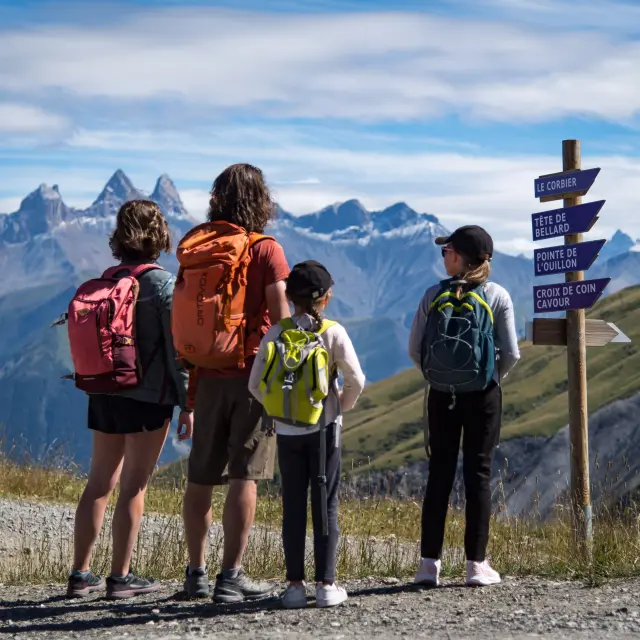
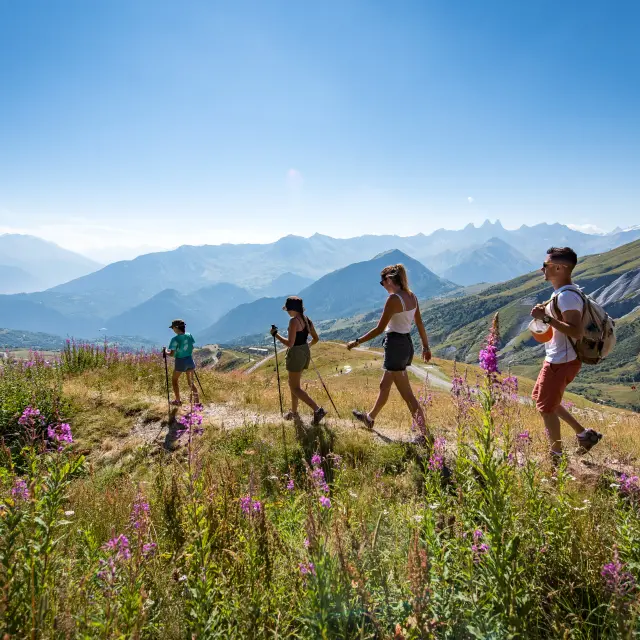
What equipment What to take on a hike?

 Nutrition and hydration

Make sure you take enough water and a few energy-boosting snacks to keep your energy levels up throughout the walk. Drink regularly, even if you aren’t thirsty yet.

 Appropriate clothing

In the mountains, weather conditions can change rapidly. Always take clothing to protect you from the sun, wind, rain and cold: sunglasses, a cap, sun cream, a waterproof jacket, a fleece or warm clothing, depending on the season.

If you’re hiking with children, make sure their kit is suitable for their age and build. They are more sensitive to changes in temperature and tire more quickly.

 Essential equipment

  • A fully charged mobile phone (with 112 saved).
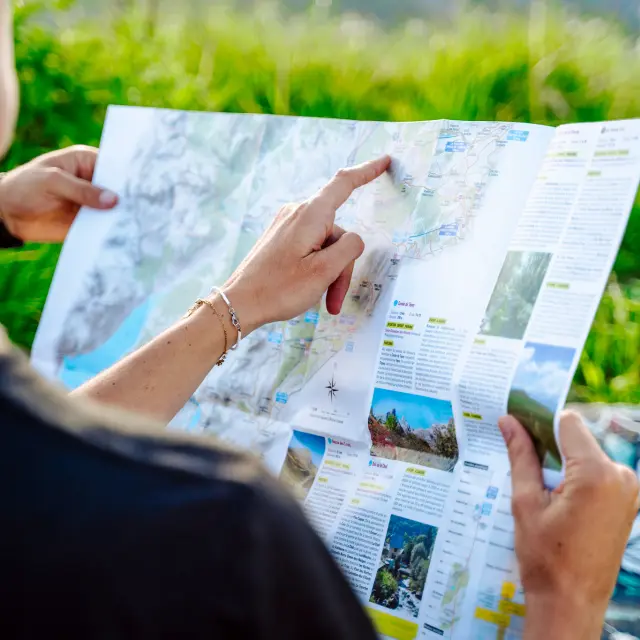
  • Hiking map.
  • GPS or app with offline maps.
  • Compass.
  • Head torch.
  • Whistle.
  • Multifunction knife.
  • First-aid kit: including pressure bandages, bandages, plasters, a survival blanket…

The weight of your rucksack should not exceed around 10 per cent of your body weight to ensure you remain comfortable whilst walking. We would like to remind you that it is important to pack carefully, choosing your equipment based on your itinerary and the advice of professionals.

Good practice during the walk

 Knowing how to make the right choices

The mountain will still be there tomorrow. If the weather takes a turn for the worse, if you’re tired, or if a member of the group is struggling, turn back or adjust your route.

 Hiking with children

Keep to a steady pace, take plenty of breaks and make sure they stay hydrated. Young children carried in a baby carrier must be protected from the sun, the wind and changes in temperature.

 Show respect for other road users

The paths are shared by walkers, mountain bikers, shepherds and livestock farmers. Please be considerate and help to ensure a pleasant atmosphere for everyone.

Respect the mountain and its surroundings

The mountains are a fragile natural environment. Every walker can help to preserve them by taking a few simple steps.

The right reflexes to adopt

  • Please take all your rubbish home with you, even biodegradable waste.
  • Stay on the marked paths to protect the vegetation.
  • Respect wildlife by keeping your distance and keeping noise to a minimum.
  • Do not pick protected flowers.
  • Close gates or barriers behind you.
  • Avoid lighting fires or throwing away cigarette ends, particularly in summer when the risk of fire is high.

Crossing the mountain pastures in complete safety

 Close to the herds

Walking through a mountain pasture is one of the most enjoyable experiences of mountain hiking. To ensure everything goes smoothly, keep a reasonable distance from the herds and walk round them if the path allows.

This way, you’ll be able to enjoy your walk to the full whilst respecting the animals and the work of the herders.

 Guard dogs (patous)

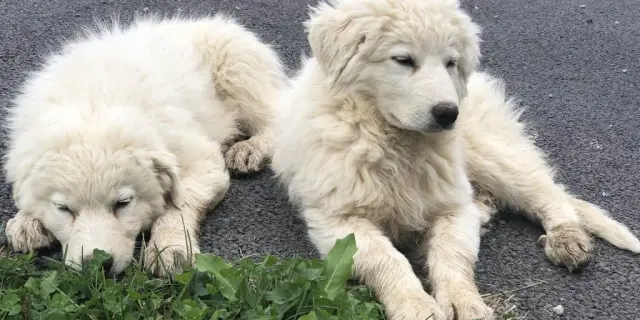
You may come across guard dogs, known as patous, which watch over the herds in the mountain pastures. It is normal for them to approach you to assess your presence.

Simply carry on your way calmly, without running or making any sudden movements. If you’re hiking with your dog, keep it on a lead when approaching herds to avoid any interaction.

What to do if What to do in a mountain emergency?

Good preparation is the key to a successful hike. And whilst unexpected incidents are rare, knowing what to do in an emergency will allow you to enjoy the mountains with complete peace of mind.

What to do:

  • Stay calm so that you can assess the situation and make the right decisions.
  • Get yourself and the person involvedto safety, if this can be done without putting yourself at risk.
  • Call 112, the European emergency number, if assistance is required.
  • Give your location as precisely as possible (name of the path, landmarks, altitude or GPS coordinates if you know them) to help the emergency services reach you.
  • Reassure the injured person and protect them from the cold with a survival blanket if you have one.
  • Avoid moving them, unless they are in an area posing an immediate danger.

Understanding trail markings

 What is the purpose of markup?

The walking trails are signposted to guide you along your route and ensure you can follow the correct path with complete peace of mind. These markers, painted on trees, rocks, posts or other surfaces, are placed at regular intervals to confirm that you are on the right track.

The signposting makes it easier to find your way and reduces the risk of getting lost, but it is no substitute for proper preparation. Before setting off, it is advisable to check your route and take a map or a hiking app with offline maps downloaded.

 The different types of navigation marks

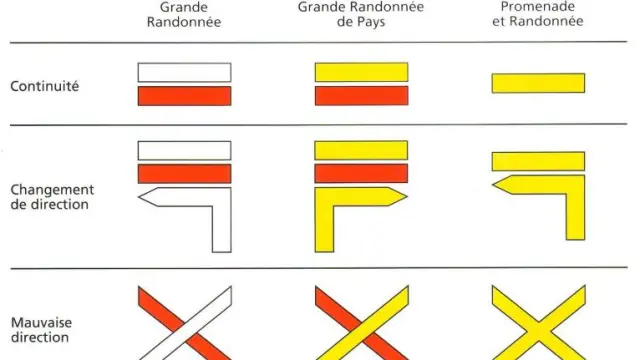
In France, there are several types of signposting used to identify routes according to their type and length. The Grande Randonnée (GR®) trails, the Grande Randonnée de Pays (GRP®) trails and the Promenade et Randonnée (PR®) trails each have their own specific signposting, which is easily recognisable in the countryside.

Using the illustration below, find out what the main signposting symbols mean and learn how to recognise them on your next hikes. This will enable you to follow your route with greater confidence and make the most of your outings in the great outdoors.

Prepare for your hike