Information about the route
Duration
2 hours
Difficulty
Not very difficult
distance
7.5 km
elevation gain
385m elevation gain
Departure
Tourist Information Centre
The Three Crosses
between nature and heritage
2 hours
Not very difficult
7.5 km
385m elevation gain
Tourist Information Centre
Fancy a meaningful day out, combining moderate exercise with new discoveries? This walk takes you from the cool banks of the Edioulaz stream to the summit of the Trois Croix, before heading back down to a leisurely stroll through the charming hamlet of La Rochette. A circular walk steeped in history, which will appeal to both nature lovers and those curious about the local heritage.
From the Tourist Office, take the street opposite, heading towards the tennis courts and the pump track. Then follow the sign for “Au Fil de l’Eau”: the path takes you to the Edioulaz stream, which you follow as it winds its way through the forest. A gentle start to the walk, lulled by the lapping of the water.
As you emerge from the forest, you’ll rejoin the road: turn left towards the Col campsite. Once you’ve passed it, take the path on the left to Les Trembles, then follow the sign for “3 Croix” from the campsite. This is where the walk starts to gain a bit of altitude: the path climbs gradually to the summit, where a well-deserved reward awaits you — the panoramic view and the orientation table at Les Trois Croix.
At the summit, take a moment to catch your breath and identify the surrounding peaks before beginning the descent towards La Rochette. The path passes through the hamlet, following the sign for “La Toussuire”: take the time to stroll amongst the houses and admire the chapel and its bread oven, both reminders of this little mountain village’s rich past.
As you leave the hamlet, after passing the chapel, the path climbs back up towards La Toussuire. You then retrace your steps back to the campsite, before rejoining the path you took on the way there to reach the Tourist Office.
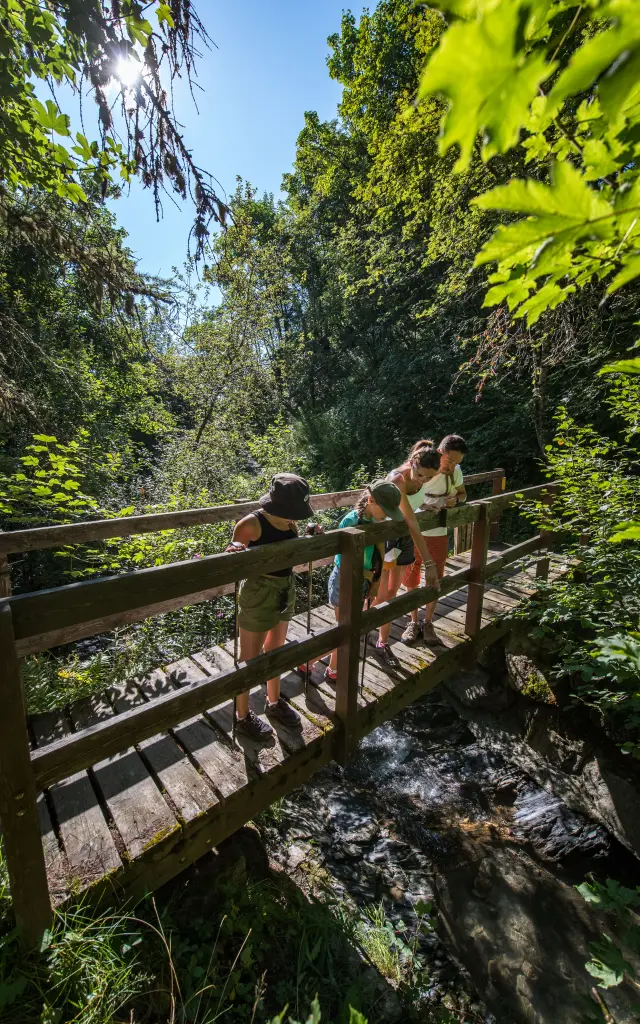
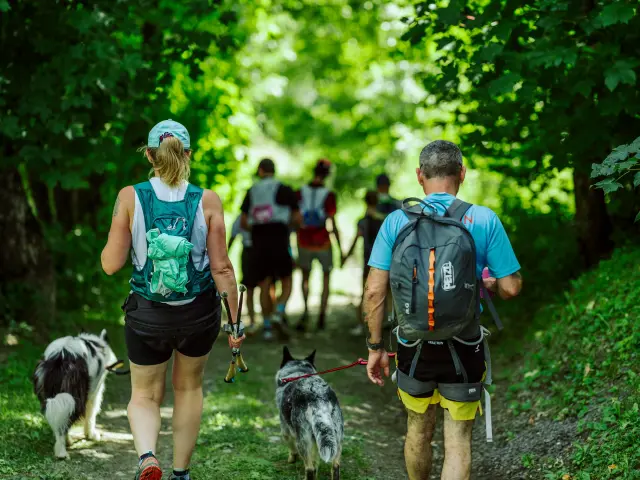
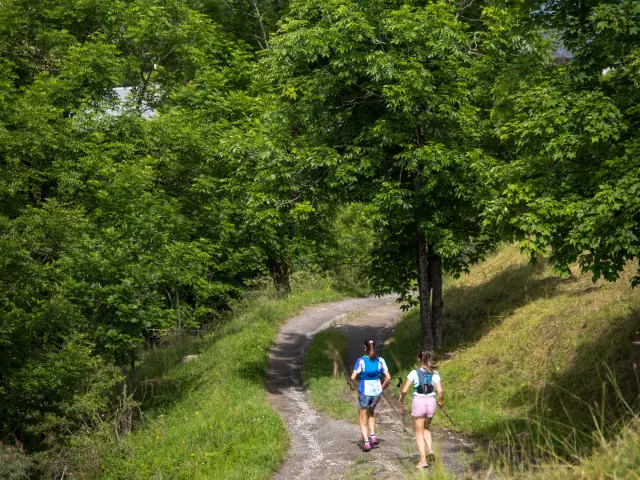
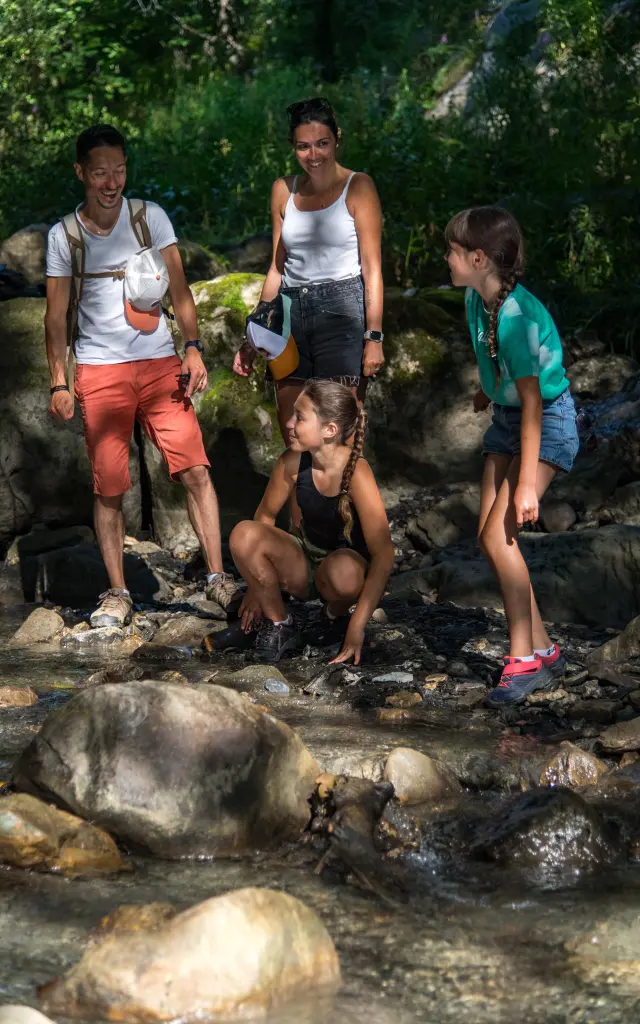
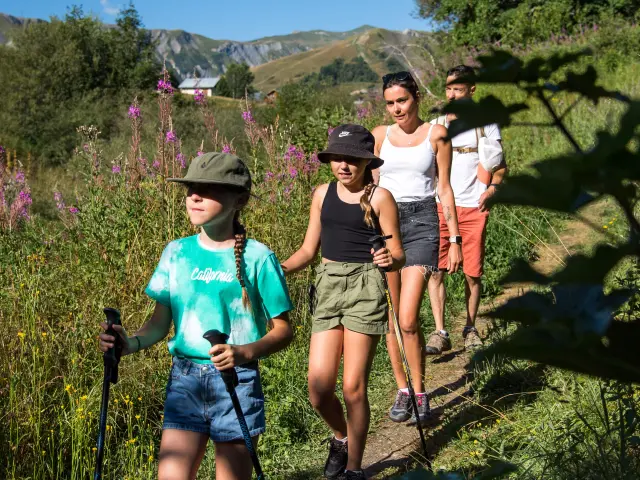

The first few kilometres take you along the Edioulaz stream, whose gentle murmur accompanies your walk. The path winds its way through the trees, offering a pleasant sense of coolness, which is particularly welcome on summer’s days.
This start to the walk is a true immersion in peaceful natural surroundings, where the water, the woodland and the birdsong create an atmosphere perfect for relaxation. You’ll be following the same route as the “Au Fil de l’Eau” walk, a lovely short loop to follow if you’d like to return to this soothing setting for a more leisurely outing.
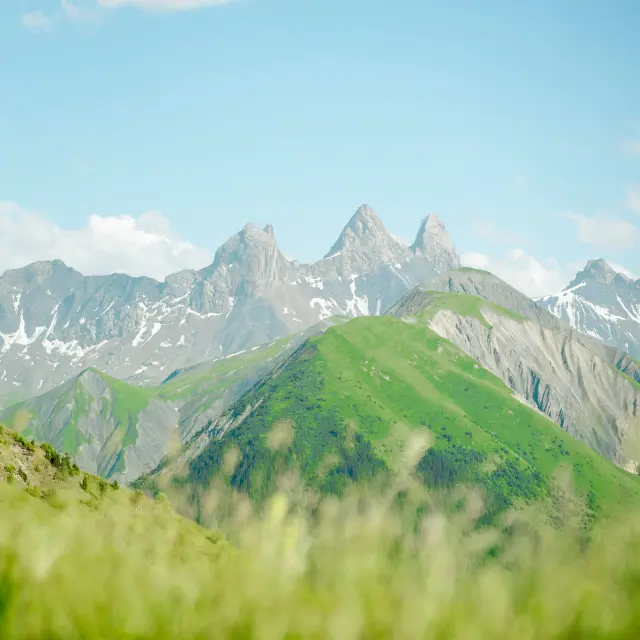
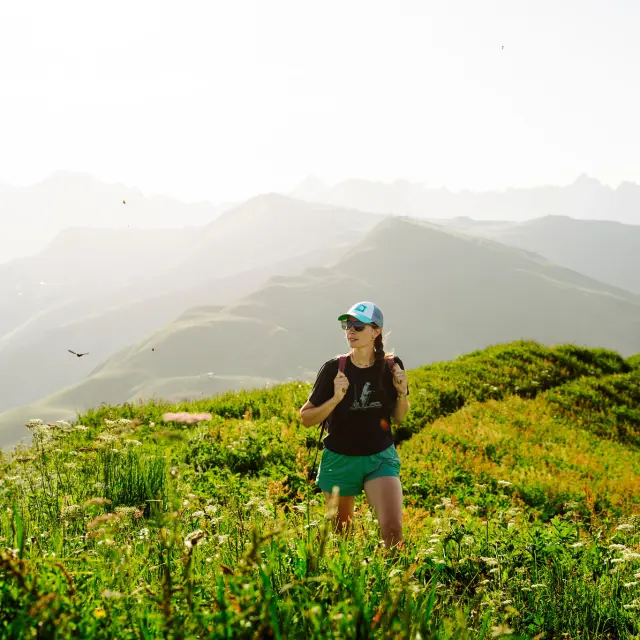
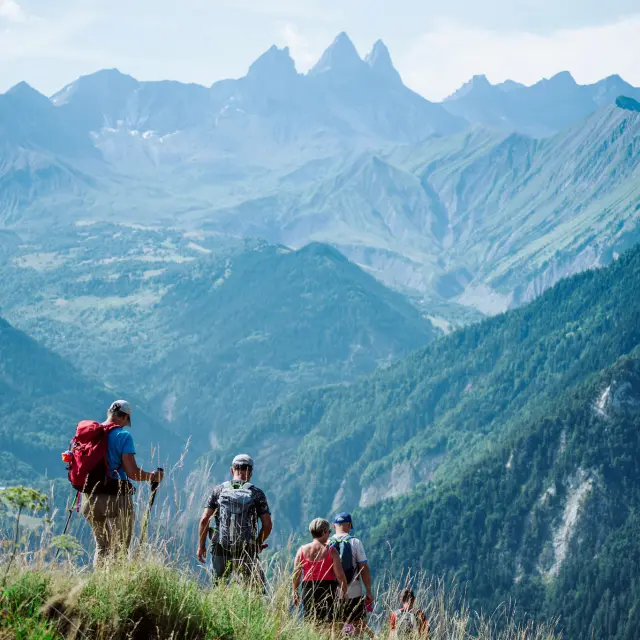
As you leave the campsite area, the path gradually climbs. The scenery changes as you ascend: the forest gradually gives way to high-altitude meadows, revealing superb views of La Toussuire and the Maurienne mountains.
This steady climb allows you to appreciate the full diversity of the landscapes surrounding the resort.
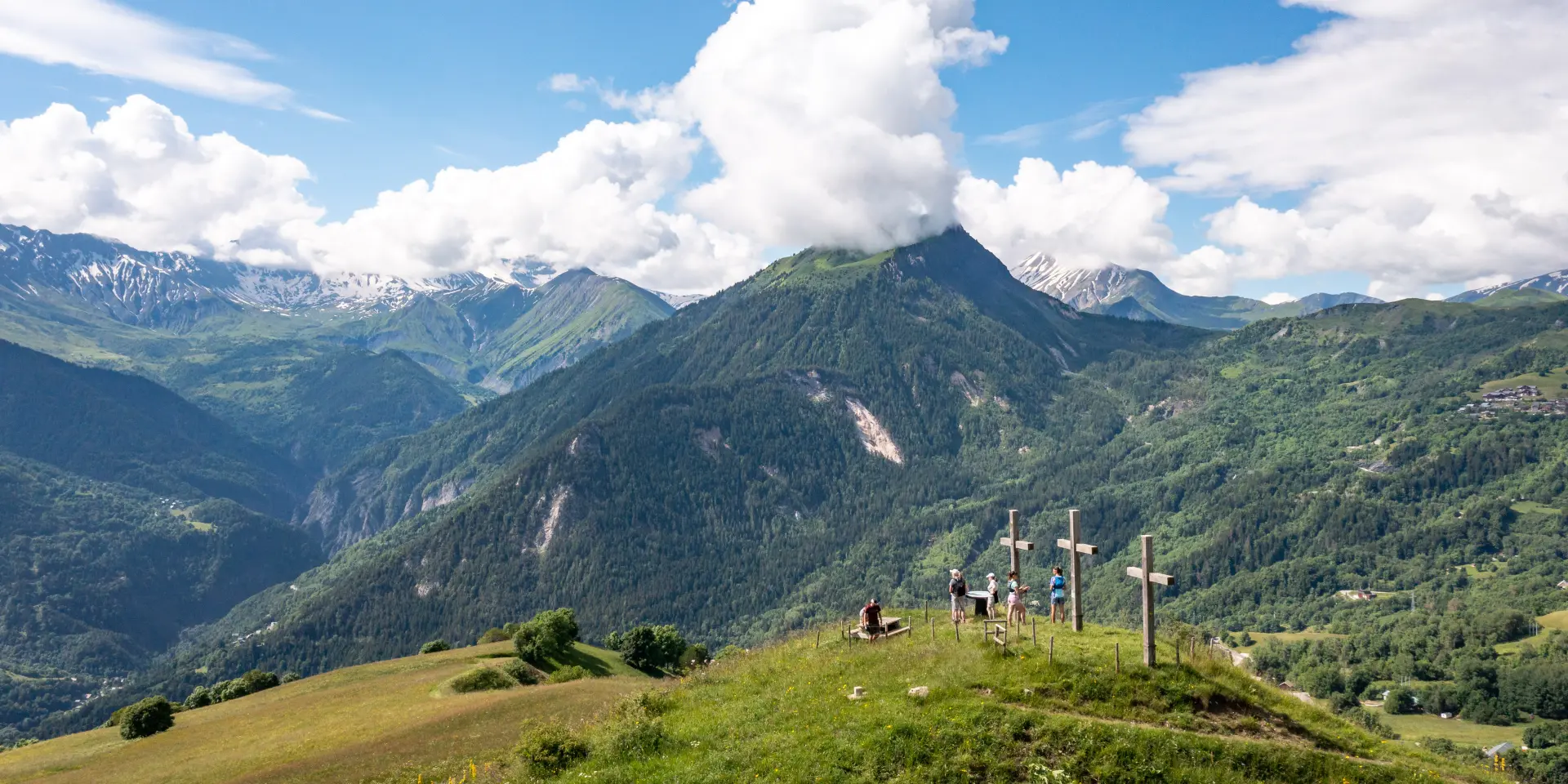
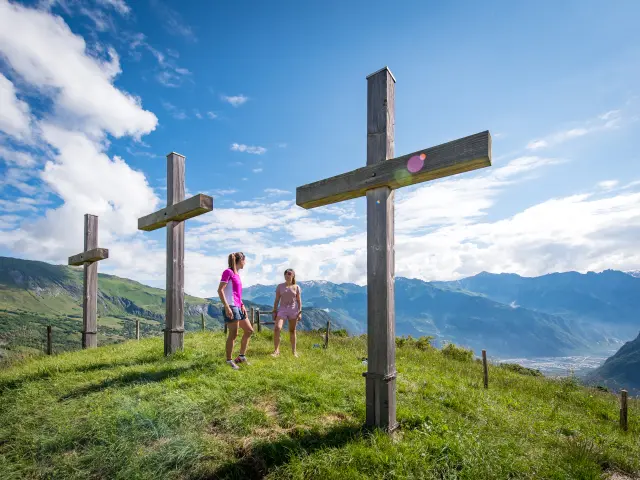
Reaching Les Trois Croix is the highlight of the walk. From this natural viewpoint, an orientation board helps you identify the main peaks that make up the landscape. Take the time to admire the panorama or take a break at the picnic table set up facing the mountains.
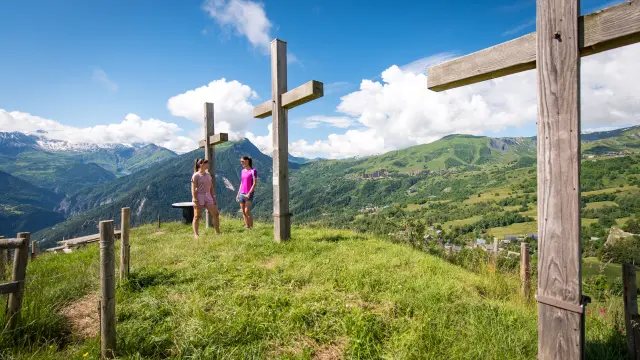
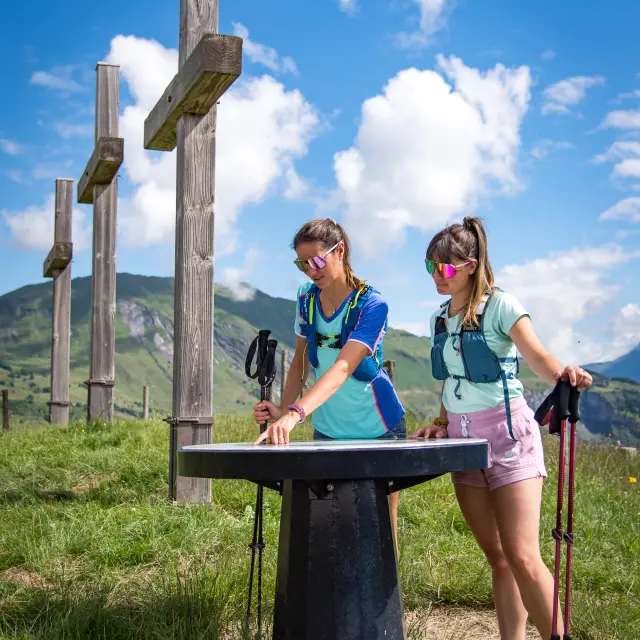

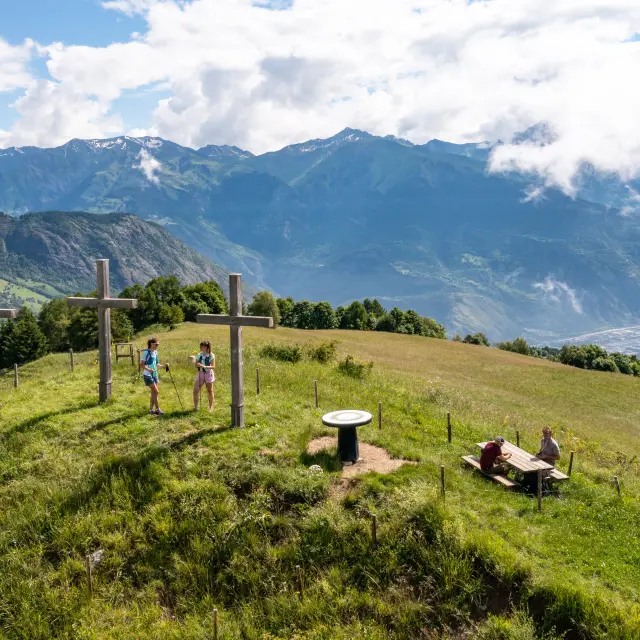

The Three Crosses are the last remaining traces of an ancient calvary consisting of fourteen crosses, erected in the 15th century by the inhabitants of the hamlet of La Rochette. At that time, the villagers implored divine protection so that they might be spared from the plague epidemics afflicting the region.
Even today, this site retains a strong historical and symbolic significance, making this walk a wonderful blend of heritage and nature.
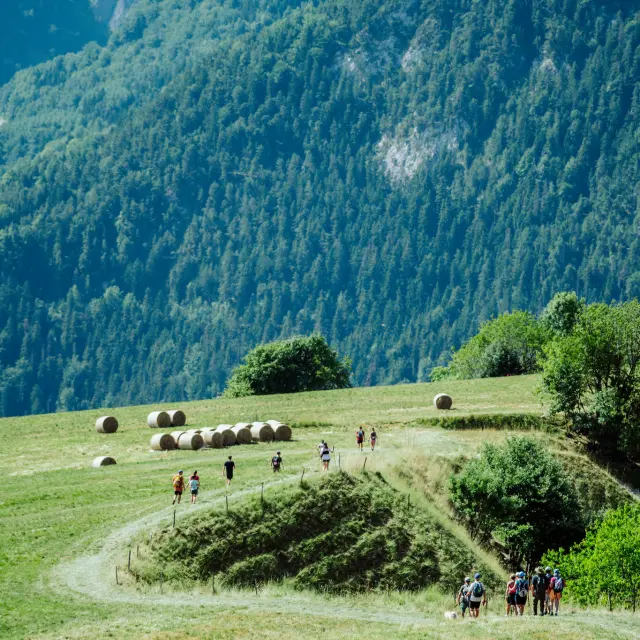
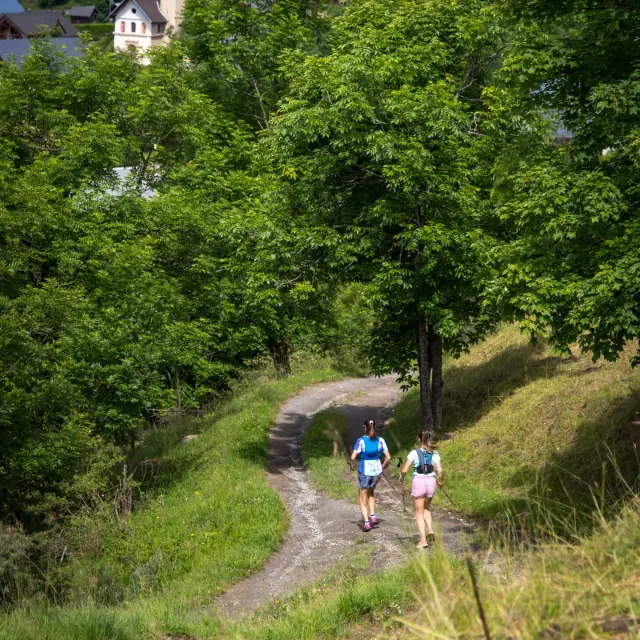
The return route takes you through the hamlet of La Rochette, one of the most authentic in La Toussuire. Take the time to stroll through its narrow streets and admire its traditional stone and timber houses, which bear witness to the mountain architecture of days gone by.
You can also explore the Saint-Roch Chapel, which was rebuilt in the 19th century following several centuries of landslides. With its understated charm and eventful history, it forms part of the village’s iconic heritage.
Just a stone’s throw from the chapel, the bread oven serves as a reminder of the daily lives of the villagers of yesteryear, when every hamlet had its own communal oven where families would come to bake their bread.